
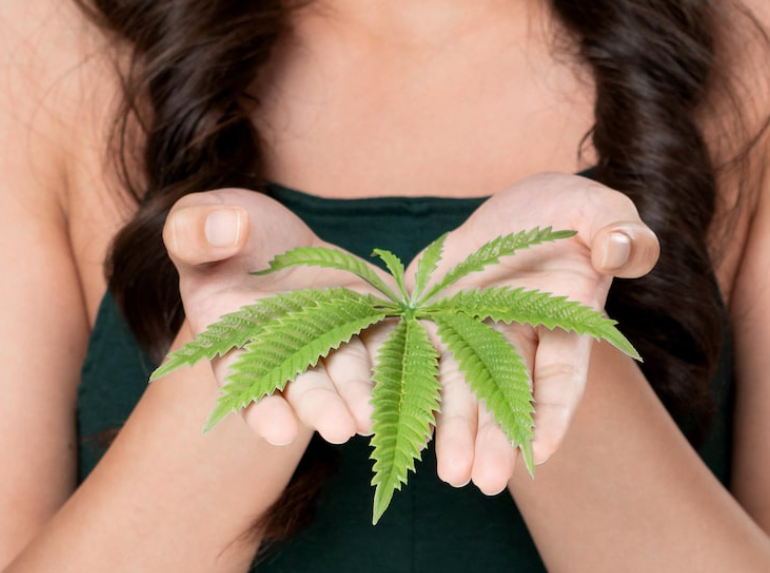
For decades, cannabis culture equated value with intensity. The stronger the effect, the better the product. But a quieter evolution is reshaping that narrative. A growing segment of adults is turning to cannabis not to feel altered, but to feel steady.
They are not seeking escape or euphoria. They are seeking regulation — a way to soften stress, improve sleep, or ease physical discomfort without disrupting mental clarity. In this context, cannabis is less a recreational indulgence and more a considered lifestyle choice.
This shift reflects a maturing consumer base. It also reflects a deeper public understanding of how cannabis interacts with the body.
Cannabis Is a Spectrum, Not a Switch
Popular discourse often frames cannabis in binary terms. You are either high or you are not. Pharmacologically, that is an oversimplification.
Cannabis contains dozens of biologically active compounds that interact with the body’s endocannabinoid system, a regulatory network involved in mood, sleep, appetite, and stress response. THC is the primary intoxicating compound, but it is only one component of a complex system.
CBD, for instance, is non-intoxicating and works more indirectly, influencing receptor activity tied to stress and inflammation. Other cannabinoids and aromatic compounds may also contribute to how cannabis feels, though research is ongoing.
Institutions such as the National Institutes of Health continue to study these interactions. While the science is still developing, one point is broadly accepted: cannabis effects exist along a continuum shaped by dose, ratios, personal biology, and context.
For individuals who value clarity, that continuum offers meaningful choice.
Microdosing as a Measured Approach
Microdosing has become a common strategy among people who prefer minimal psychoactive effects. Typically, this involves consuming very small amounts of THC, often around 1–2.5 milligrams, and sometimes less depending on individual sensitivity.
The objective is not to feel nothing, but to feel just enough. Users often describe mild relaxation or a slight easing of tension rather than a noticeable shift in perception.
What distinguishes microdosing is intentionality. It requires patience and self-observation. The results can be subtle, but subtlety is precisely the point. For many adults balancing work, family, and personal commitments, predictability matters more than intensity.
Lower doses also tend to reduce the likelihood of side effects such as anxiety or mental fog, making cannabis easier to integrate into daily life.
The Case for Lower THC
There is a lingering assumption that higher THC delivers stronger benefits. Emerging evidence suggests the relationship is not so simple. Some studies exploring cannabis and anxiety or pain indicate that moderate or low doses may provide support while higher doses increase the likelihood of unwanted effects.
This pattern mirrors many substances where benefit peaks at moderate use. More does not necessarily mean better.
For consumers who do not want to feel high, this reframes cannabis entirely. It becomes something to calibrate rather than maximize. Many experienced users find that when they reduce their dose, they regain sensitivity and achieve more consistent outcomes.
CBD and the Appeal of Non-Intoxicating Options

CBD has become central to the conversation around non-intoxicating cannabis. It does not produce a high and may temper some of THC’s psychoactive effects when the two are combined.
The World Health Organization has reported that CBD shows no evidence of abuse potential or dependence in humans. While this does not make it universally effective for every concern, it helps explain its appeal among cautious or first-time users.
CBD-forward approaches often attract adults who are curious about cannabis but hesitant about losing control or mental sharpness. For some, it serves as a comfortable entry point into a broader understanding of cannabinoids.
Functional Use Signals Cultural Maturity
One of the most significant developments in cannabis culture is the rise of functional use. This mindset treats cannabis less as a novelty and more as a targeted tool.
Functional consumers tend to ask grounded questions. Does this help me relax without impairing my thinking? Does it support sleep without next-day fatigue? Can it coexist with my responsibilities?
These questions shift the focus from potency to purpose. They also align cannabis with broader wellness trends that emphasize personalization and moderation.
Interestingly, people who approach cannabis functionally often describe a more stable relationship with it. Because the goal is support rather than escape, use patterns tend to be more measured.
Changing Sensitivity and Self-Awareness
Sensitivity to THC is not fixed. Age, stress levels, sleep quality, and metabolism all influence how cannabis feels. Experiences that once felt comfortable may later feel overstimulating.
This does not mean cannabis is no longer appropriate. It often means the approach needs recalibration. Lower doses, slower pacing, and CBD inclusion can help align use with current physiology.
Set and setting also play a role. Calm, familiar environments tend to produce more predictable experiences than spontaneous or socially pressured situations.
Education as a Protective Factor

Access to reliable information has transformed cannabis use. Consumers today can learn about dosing, onset times, and cannabinoid ratios before experimenting. This reduces trial and error and supports safer decision-making.
Education also encourages moderation. When people understand how cannabis works, they are more likely to approach it thoughtfully rather than impulsively.
Our related coverage on how cannabis experiences evolve across decades explores how age and lifestyle influence cannabis sensitivity (internal link: Why Cannabis Feels Different in Your 40s Than It Did in Your 20s).
A Different Kind of Cannabis Conversation
The assumption that cannabis must be intoxicating to be meaningful is gradually fading. For many adults, the appeal lies in subtle support, not altered consciousness.
Microdosing, low-THC approaches, and CBD-forward use reflect a broader cultural shift toward intentional living. Cannabis is becoming less about intensity and more about alignment with daily life.
For people who do not want to feel high, this is not a limitation. It is simply a different relationship with cannabis — one guided by moderation, awareness, and personal priorities.


