
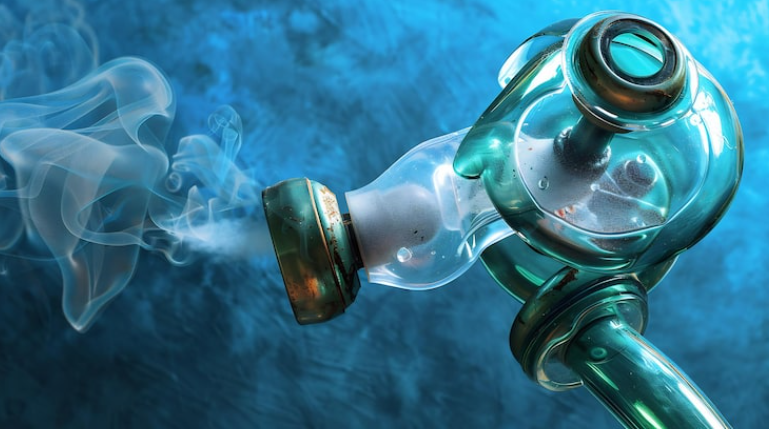
For a long time, bongs lived in hiding.
They were tucked under sinks, shoved into closets, or wrapped carefully and placed somewhere “out of sight.” Even in homes that were otherwise thoughtful and well-designed, cannabis objects were treated as something temporarily functional, yes, but never meant to be seen.
That instinct is quietly disappearing.
As cannabis becomes less taboo and interiors become more intentional, bongs are being reconsidered for what they actually are: beautifully engineered glass objects that happen to serve a function. In the right context, they don’t disrupt a space. They elevate it.
This shift isn’t about making a statement. It’s about acknowledging that good design deserves daylight.
From Paraphernalia to Object
Design history is full of objects that made this transition. Decanters were once hidden behind cabinets. Espresso machines used to be utilitarian eyesores. Even kitchen knives lived in drawers until craftsmanship turned them into display pieces.
Bongs are following the same path.
Contemporary glassmakers are moving away from novelty shapes and loud branding in favor of:
- Clean silhouettes
- Architectural balance
- Muted or intentional color
- Proportions that feel sculptural
The result is an object that reads less like paraphernalia and more like studio glass—something you might expect to find on a shelf next to ceramics, books, or art.
Why Bongs Work as Décor (When Chosen Well)
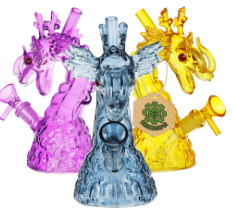
At their best, bongs already speak the language of design.
They’re vertical, which gives them presence without taking up much space. They’re transparent or softly tinted, which allows them to reflect their surroundings rather than compete with them. And they’re inherently sculptural curves, cylinders, negative space, and symmetry are built into the form.
In minimalist, modern, or design-forward homes, this makes them surprisingly easy to integrate. A well-designed bong doesn’t demand attention. It simply holds it.
Placement Is Everything
The difference between a bong that feels intentional and one that feels awkward has almost nothing to do with the object itself. It’s about where and how it’s placed.
- On open shelving, styled among books or ceramics, it reads as curated rather than conspicuous.
- On a bar cart, it feels natural another vessel associated with ritual, leisure, and pause.
- On a sideboard or console, it acts as a vertical anchor, much like a vase or sculptural lamp.
- In a studio or creative space, it feels expected, even understated.
What matters is that it looks chosen, not leftover.
Styling With Restraint
Treating a bong as décor requires the same discipline you’d apply to any design object.
Clean glass is non-negotiable. Clouded residue instantly breaks the illusion. Color should be intentional—clear, smoke-toned, or softly tinted glass tends to age best. And space matters. Giving the object room to breathe makes it feel purposeful rather than cluttered.
Pairing it with texture helps too. Wood, stone, linen, matte ceramics—these materials ground glass and keep it from feeling cold or overly precious.
The goal isn’t to spotlight the bong. It’s to let it belong.
Function, Quietly Present
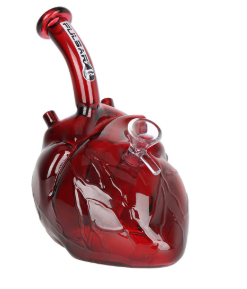
What makes this evolution interesting is that function hasn’t disappeared, it’s just no longer the headline.
Much like a beautiful coffee maker or a sculptural lamp, a bong can exist in the open without announcing what it does. When used, it becomes part of a ritual. When not, it simply becomes part of the room.
That duality, useful yet decorative, is what allows it to live comfortably in adult spaces.
A Subtle Signal of Cultural Maturity
Displaying a bong openly isn’t about provocation. It’s about comfort.
It suggests a home where choices don’t need justification and objects aren’t hidden out of reflex. It reflects a broader cultural shift—one where cannabis is no longer treated as something shameful or juvenile, but as another adult indulgence, not unlike wine or espresso.
In that way, a well-placed bong says less about cannabis and more about confidence.
The Takeaway
Bongs don’t need to be hidden to be tasteful. When designed thoughtfully and placed with intention, they can function exactly like any other sculptural object—adding form, balance, and personality to a space.
This isn’t about turning cannabis into décor.
It’s about recognizing when design earns its place in the open.
And sometimes, the most interesting objects in a home are the ones that quietly do more than one thing well.